






Août
Airports, railway stations and public transport hubs combine passenger conversations, rolling luggage, vehicle movements and public announcements. In addition to hard floors, glazed walls, and open ceilings, this activity can create excessive reverberation.
At Acoustic Panels, we manufacture high-performance acoustic products for walls and ceilings. Our panneaux de réduction du bruit are designed to absorb unwanted sound reflections, helping transport operators create clearer, calmer, and more comfortable public spaces without compromising the building’s appearance or practical use.
Why Acoustics Matter in Airports and Transport Terminals
Clear communication is essential within any transport facility. Passengers depend on announcements for boarding information, platform changes, delays and safety instructions. If reverberation blurs spoken information or makes it difficult to understand, travellers may miss important updates.
Noise can also affect staff working at check-in desks, information points, ticket offices, security areas, and customer service counters. Reducing echo in these spaces can support more comfortable conversations and make communication easier amid the background noise of a busy terminal.
Acoustic comfort matters too. Although treatment cannot remove every sound, controlling excessive reverberation can make waiting areas feel calmer and less overwhelming.
How Noise Reduction Panels Work
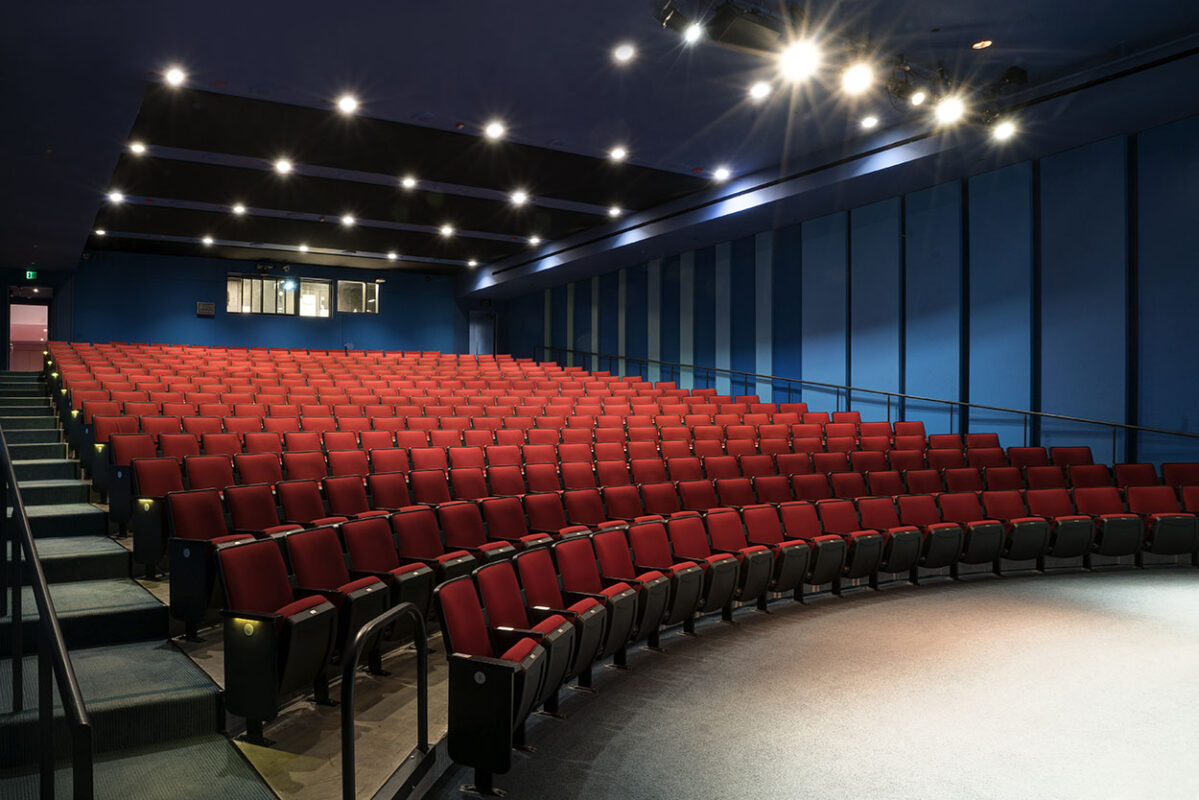
Sound reflects strongly from hard surfaces such as concrete, glass, metal and stone. In a large terminal, these reflections can continue to reverberate throughout the space, increasing the time it takes for sound to decay. Noise reduction panels use sound-absorbing materials to capture some of this energy rather than allowing it to bounce repeatedly between surfaces.
This treatment primarily improves the acoustic conditions inside the space. It can reduce echo, control reverberation and improve speech intelligibility, but standard absorptive panels do not provide complete soundproofing or stop every external noise source. Where sound transmission between areas is the main concern, additional isolation or barrier systems may also be required.
Wall-Mounted Acoustic Panels for Passenger Areas
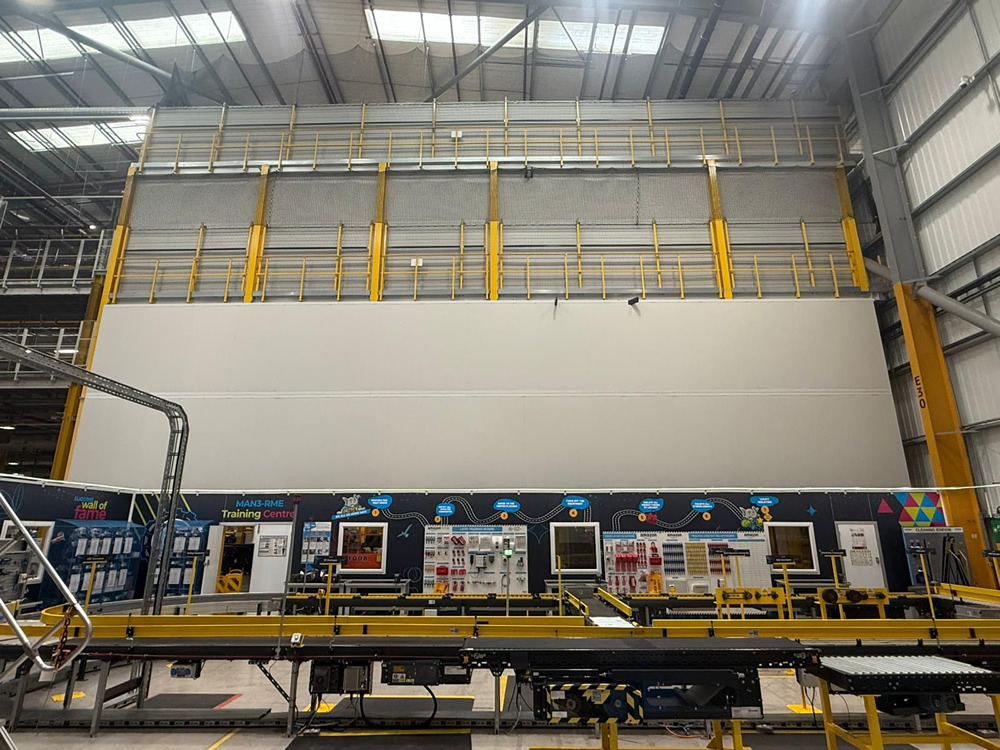
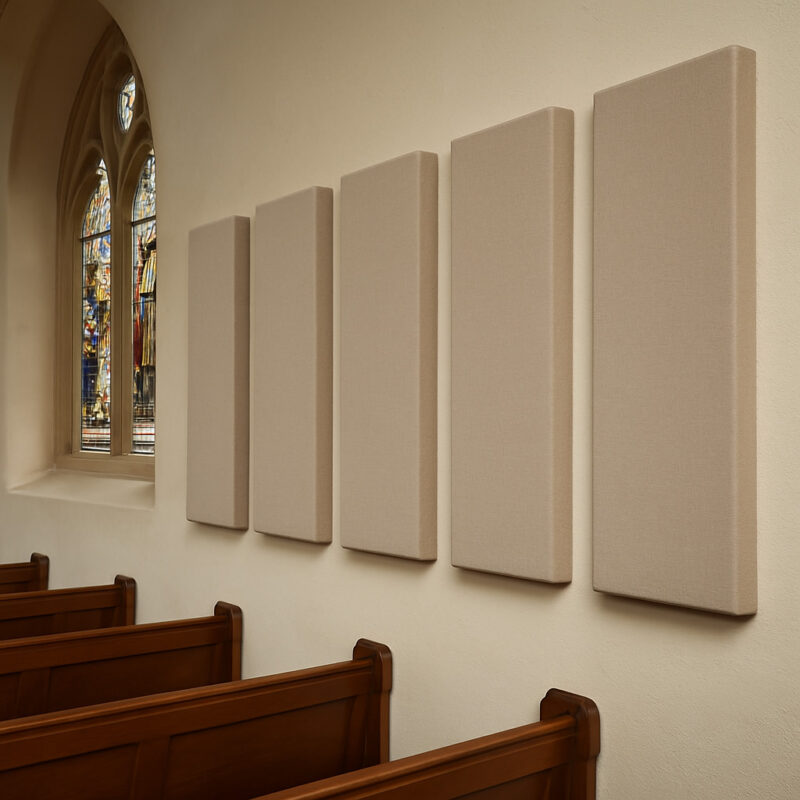
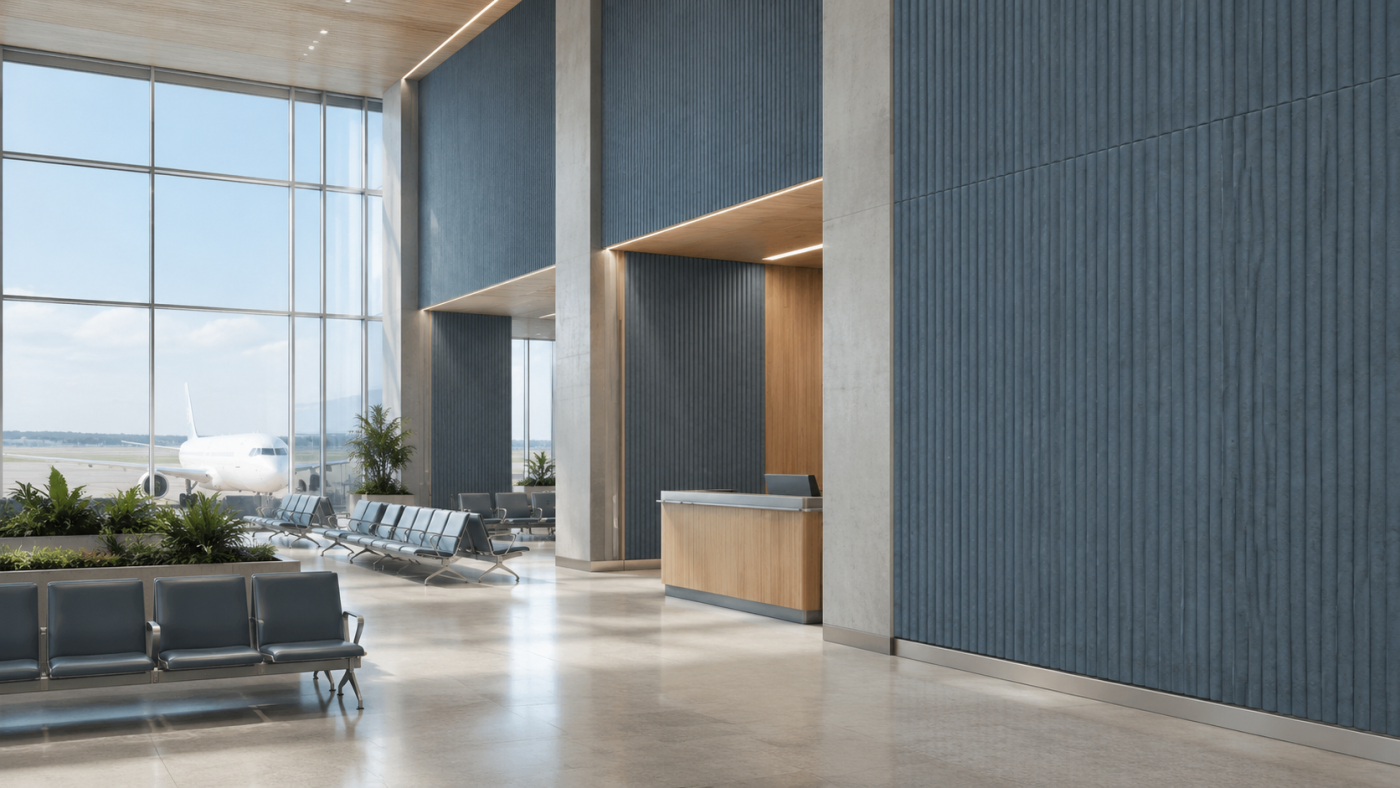
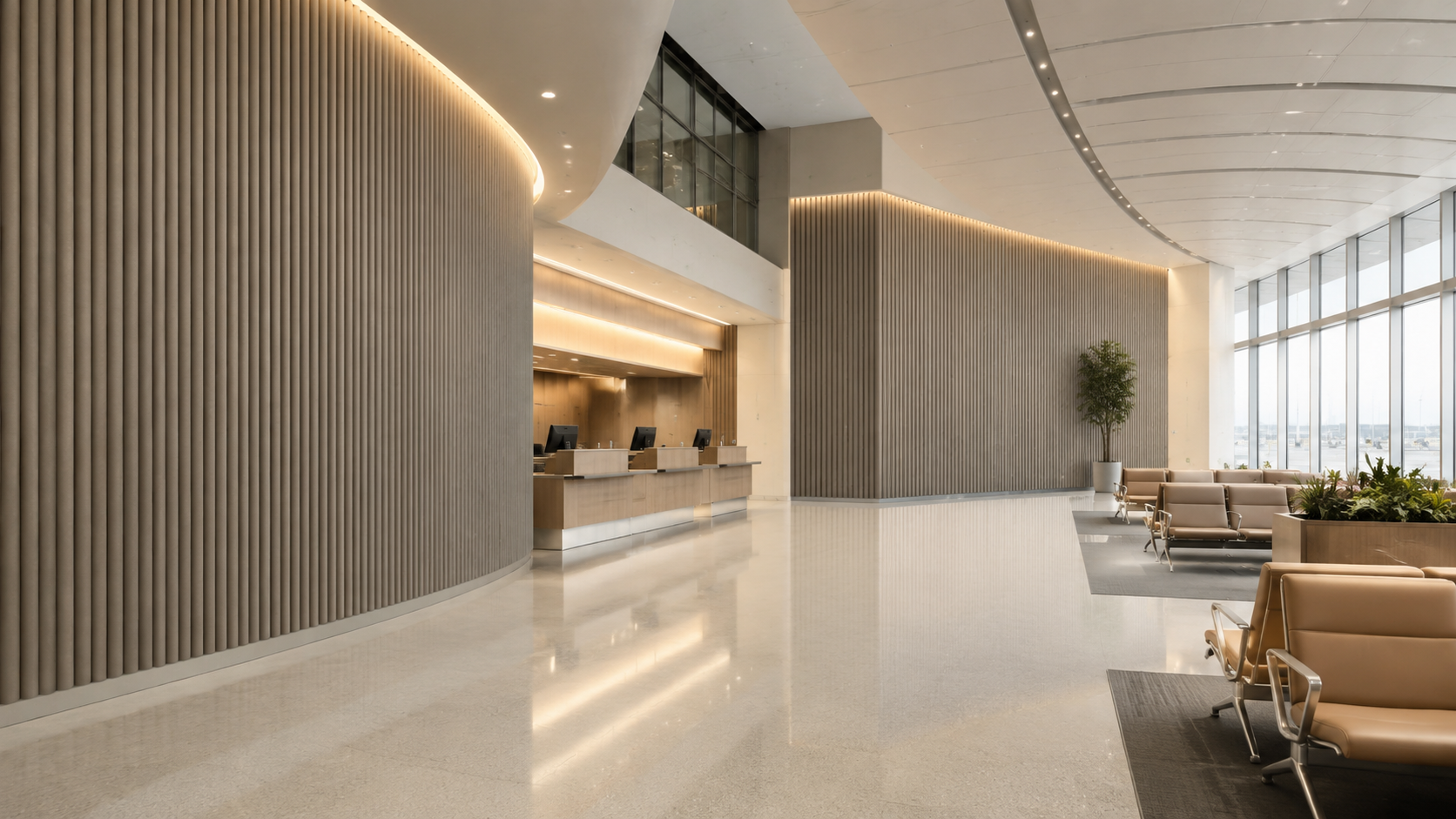
Wall-mounted noise-reduction panels can treat large reflective surfaces in concourses, waiting areas, corridors, lounges, and customer-service zones. They may be positioned close to busy sound sources or across opposing walls where repeated reflections are causing problems.
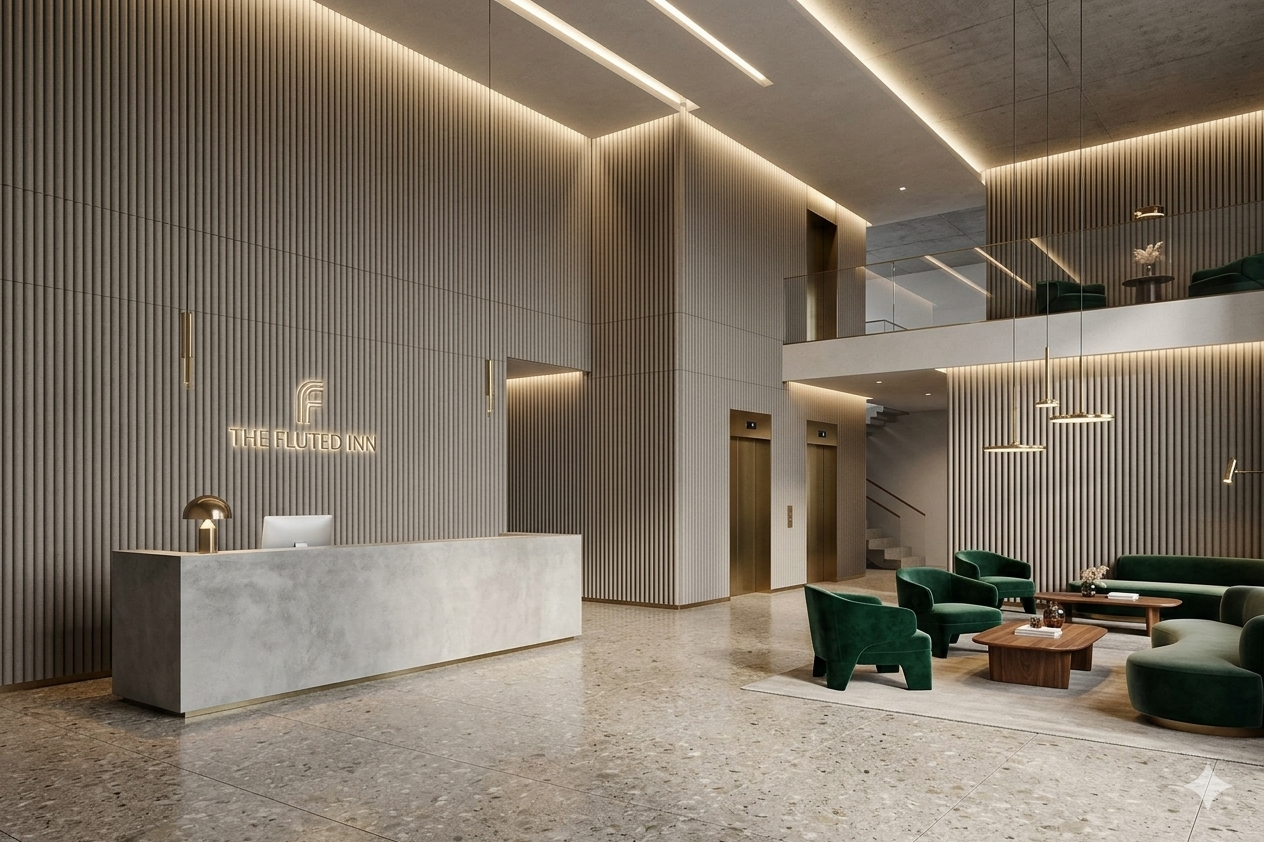
Different panel sizes, shapes, colours and finishes can complement architectural materials, branding and wayfinding schemes, turning a functional installation into a considered interior feature.
Depending on the project and selected product, materials may include recycled PET felt, fabric-wrapped glass wool, melamine foam or specialist acoustic foam. Product-specific acoustic test results, fire information and installation guidance should always be reviewed during specification.
Ceiling Panels, Rafts and Baffles for Large Terminals
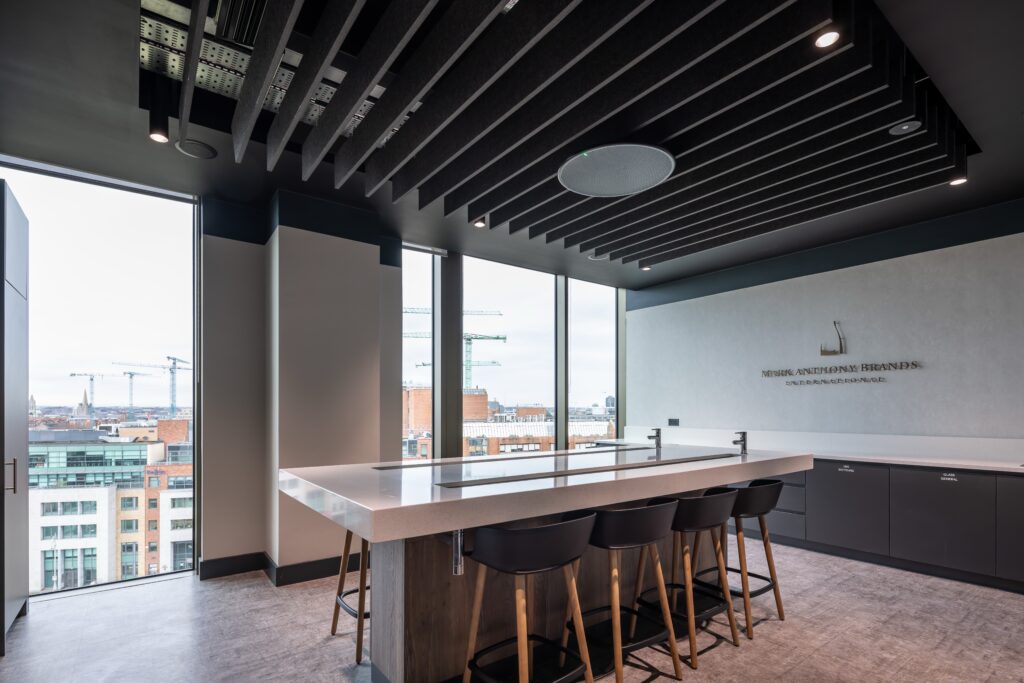
Ceiling treatments are particularly useful in airports and transport hubs because glazing, signs, screens, retail frontages and building services often occupy wall space. Suspended ceiling rafts and baffles use the large overhead area to provide sound absorption without reducing valuable floor space.
Baffles are normally suspended vertically, while rafts sit horizontally below the structural ceiling. Both formats can help control reflections in high-volume interiors and accommodate lighting, ventilation, and other architectural features.
Quantity, size, suspension height and spacing all influence performance. The design should consider room volume, passenger capacity, existing finishes and important sound sources.
Selecting Panels for Demanding Public Environments
Transport interiors require products suitable for continuous public use. Durability, maintenance, fixings, fire performance and compatibility with building services must be considered alongside sound absorption.
Not every panel is suitable for every location, so decisions should be based on the technical information for each product and the building’s requirements. Fire classifications, material composition and acoustic performance can vary between ranges. Panels installed close to passenger or luggage routes may also require different protection or positioning compared to products mounted at high level.
Our wall and ceiling products are available in a variety of materials and formats, enabling us to develop a solution tailored to the project’s practical and visual requirements. Custom sizes, shapes and colours can help treatments integrate with both new terminal designs and refurbishment programmes.
Creating a More Comfortable Passenger Experience
Effective acoustic treatment supports more than lower perceived noise. Improving speech clarity can make public announcements easier to understand and help staff communicate more effectively with passengers. It can also improve acoustic comfort in waiting areas, lounges, food courts, ticket halls and other shared spaces.
The best results come from considering acoustics early and treating the most significant reflective surfaces. Combining wall-mounted noise-reduction panels with ceiling rafts or baffles can provide broader coverage in large, complex interiors.
If you are planning an airport, railway station or public transport project, Acoustic Panels can help you explore suitable acoustic products for walls and ceilings. For more information, contact us using our online formulaire de contact and tell us about the building, its current noise challenges and the results you would like to achieve.
